Roman Republican Coins and Books by Andrew McCabe

This is an educational site about Roman Republican coins and related books. Well over a thousand coins are illustrated and described, and you can read reviews of hundreds of books and articles about the coins and their history. There are also many original short essays, some that take a detailed look at a coin series, and others that chart the development of coinage from the Roman kings through the end of the Roman Republic. Numismatic literature is the right word for the books, but the spirit of this website aims for shorter words and a lighter approach. I wrote it just for fun, and comments about the books are subjective and my own opinion. If you have read something that I would like, or if you have a comment about this website, please contact me either via the yahoo group RROME or by clicking on any picture on this site and writing in the comment box. The site index might help your navigation. There is nothing for sale here. Happy reading!

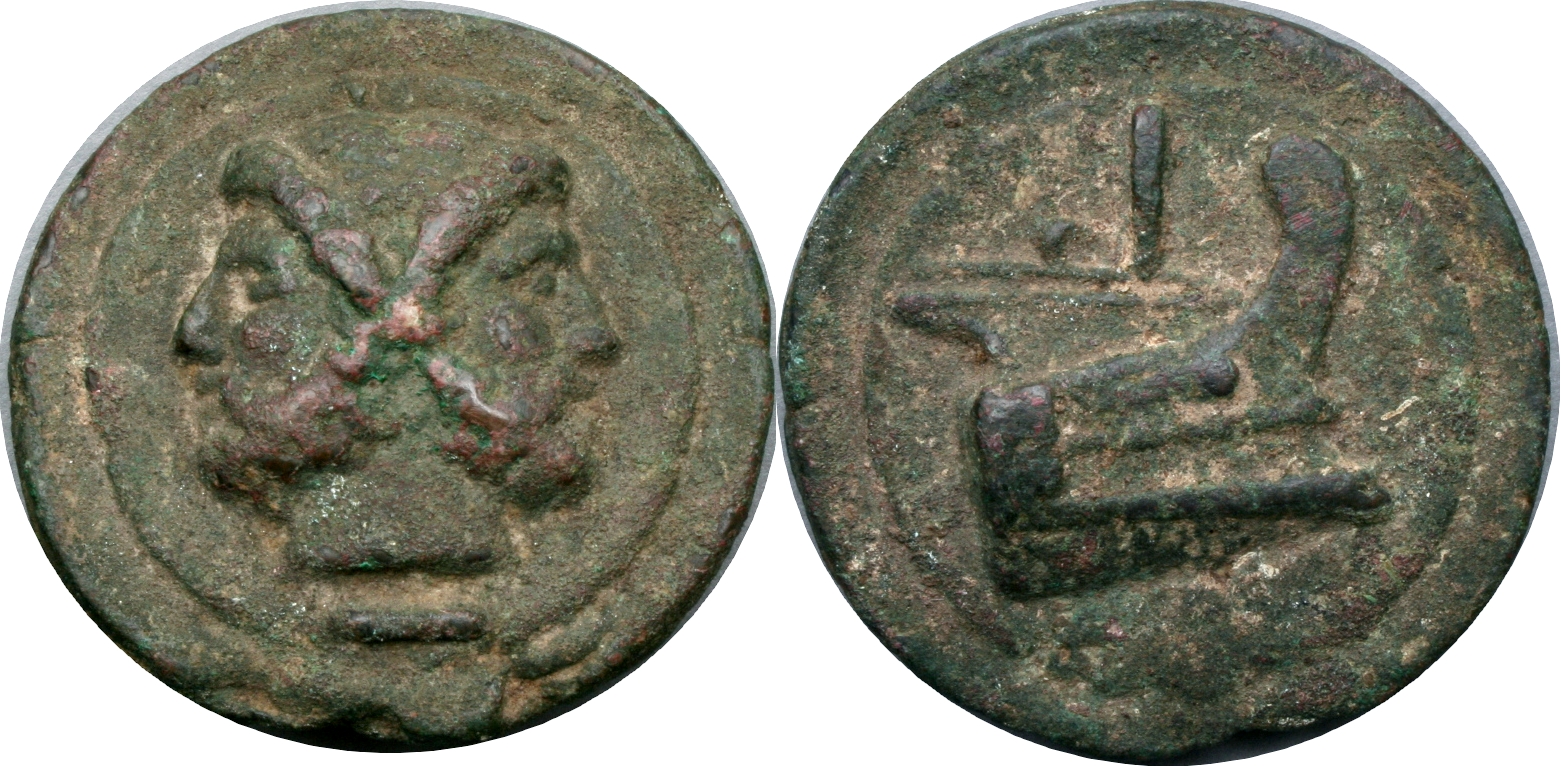
035-01-0107-280-Janus-Prow As
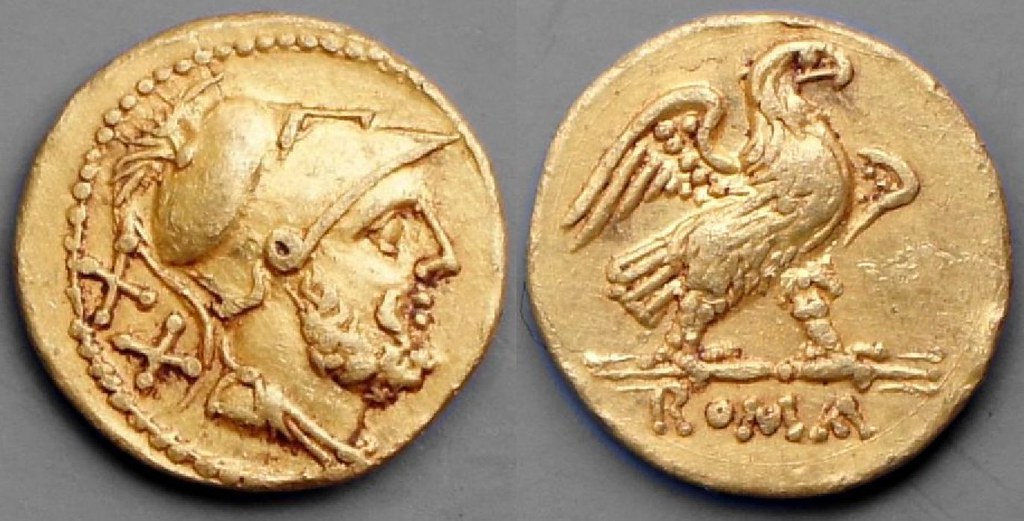
044-04-0965-14-Anonymous Mars Eagle 20 Asses
470-01-03138-34-CN.MAGNVS M.MINAT SABIN Pompey Baetica Tarracco crown Pompey Denarius

Coins:    

Aes Grave and Didrachms    
Second Punic War    
the Scipios    
the Gracchi    
Marius and Sulla    
Cicero Crassus Pompey    
Caesar and Pompey    
Brutus and Cassius    
Second Triumvirate    
Antony and Octavian    
Italian and Provincial    

   Books:

   Crawford Grueber Sear
   Other Key References
   Handbooks
   Coins and History
   Auction Catalogues
   Hoards and Archaeology
   Minting and Money
   Period-specific studies
   Current Numismatic Research
   Sources for Numismatics
   Italian and Provincial
024-04-0106-140-Roma-Wheel Bull Wheel Semis

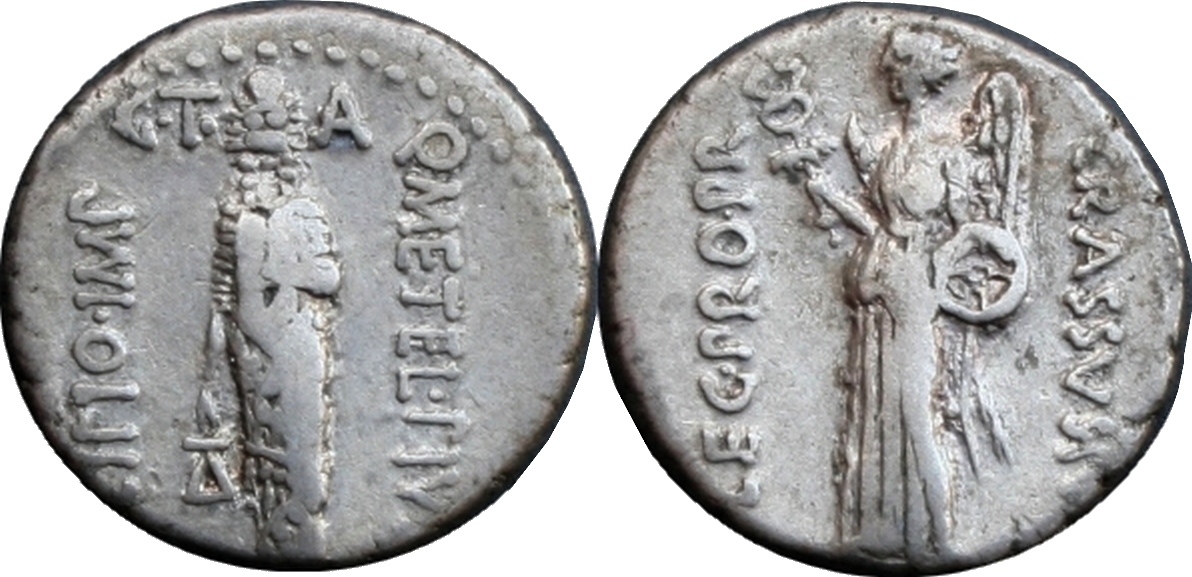
460-04-0232-38-SCIPIO IMP CRASSVS Lion headed genius of Africa Victory Denarius

Bronze Rarities
Index: Direct Links to Coins and Books
Français         Italiano         Deutsch         Español

NEW: Survey of Numismatic Research 2002-2007
NEW: January 2010 on andrewmccabe.ancients.info

A changeable list of irreverent online chit-chat by Andrew McCabe
The Duke of Northumberland K.G., Angry Vejovis, and the Rabid Collectors of Turnpike Tickets
Andrew McCabe’s day at the bookbinder
Emil Szauer, a numismatic mentor
Review of the International Numismatic Congress, Glasgow 2009
Coins at the British Museum, a fresh perspective
Pinkerton’s Directions for Forming Cabinets
Andrew visits the archaeological remains at Naples
New Book Reviews, September 2009

January 2010: Current Numismatic Research; Imperatorial dating; British Museum pictures


The book of http://andrewmccabe.ancients.info

For Christmas 2009 gifts I downloaded the entire contents of this website, cropped clipped, formatted and pdf'd, added pictures and text, contents and headings, and finished with a 410-page 120 MB pdf file. This I brought to copy-shop, chose glossy 120 gram/m2 paper, and ran off a dozen double-sided copies. Next I visited my bookbinder, chose a burgundy linen hardcover with gold embossing, and bound up my website prints as pretty and neat as a book. Below are some pictures of the result. I illustrate this just to show how easy it can be, at a modest cost, to make a pretty and useful book of any coin collection, without ever going to a publishing house or seeking ISBN numbers. Now I carry this with me at all times - although it is a hefty 2 kilograms - and have a website resource in hand that does not depend on power supply, internet connections or even a computer. It is emphatically not for sale, I made this just for personal use. But in time there may be a real publication that looks somewhat similar. I love books, way beyond webpages, for their tactility and ease of use.

www.flickr.com

A Survey of Numismatic Research 2002-2007 and other current Numismatic Research

September 2009, in Glasgow Scotland, the once-in-six-years International Numismatic Congress was hosted by the Hunterian Museum and Art Gallery at the University of Glasgow. In preparation for the Congress the also-once-in-six-years Survey of Numismatic Research 2002-2007 was published by the International Numismatic Commission and the International Association of Professional Numismatists. So I prepared a new web-page at http://andrewmccabe.ancients.info/Research.html to host content from both the Congress and the Surveys, from Glasgow and from the prior Congresses/Surveys for Madrid and Berlin. The present content from the Glasgow, Madrid and Berlin Congresses is light, but will in time include summaries of key papers and conclusions as to their implications. But we have been fortunate that Bernhard Woytek, author of the Roman Republican section of the 2002-2007 Survey, has allowed its full text to be published here in English at http://andrewmccabe.ancients.info/Research.html in addition to the original German being available at http://www.oeaw.ac.at/numismatik/ I hope in time to be able to publish further material from the Surveys prepared for the Madrid and Berlin Congresses.

www.flickr.com

New dates for Imperatorial coin issues, from Arma et nummi

One of key books on Roman Republican Numismatics published in the last decade was Woytek's Arma et nummi. Aside from an analysis of the financial circumstances of the various Imperators in the late Republican era, it attempts a wholesale redating and relocalisation of many Imperatorial coinage issues. The book, being in German, may not be accessible to the English language readers of this website. But so as to better instill the new dating in the minds of Republican numismatists, I reproduce here the revised Imperatorial era dating with illustrations of the affected coin issues. During 2010 I also intend to illustrate the dating rearrangement of the coins of 72-50BC according to the Mesagne hoard analyses done by Charles Hersh, Alan Walker, Wilhelm Hollstein and H.B. Mattingly so that this little-understood era can be better understood by numismatists who currently can rely only on the standard texts by Crawford and Sear.

www.flickr.com

British Museum coin pictures.

The British Museum has long had the best, and the best-published, collection of Roman Republican coinage in the world. Grueber's 1910 catalogue of Roman Republican Coinage remained the best single source book on Roman Republican coinage until the publication of Michael Crawford's catalogue in the 1970s. In many respects considering its text on individual coin issues and typology it remains essential and often more informative than Crawford. The quality of its collotype plates is superb. Collotype printing combines lithography and photography methods to reproduce text or illustrations. A glass plate coated with a gelatine containing dichromate is exposed to a photographic negative, causing the plate to accept the image. When further exposure to light hardens the gelatine surface, the glass can be used as a lithographic plate. The continuous-tone quality of collotype allows for fine detail in printing, but the fragile gelatine surface and glass plate limit the number of impressions that can be made (source www.ferdinando.org.uk/printing.htm). The practical implication of using collotype in the 1910 BMCRR means that these old photographs can be enlarged without apparent degradation and with no pixellation due to their continuous tones. The 1910 BMCRR fell out of copyright in 1997 - being a corporate publication, the earlier of 70 years after author's death (1997) or 95 years after publication (2005) applies - so can now be reproduced copyright free, and I have used the BMCRR 1910 to infill for many coins that had been missing from my website.

www.flickr.com

There is however further exciting news from the British Museum. In the Glasgow International Numismatic Congress, Eleanor Ghey presented a paper describing the photography and web publication of over 12,000 Roman Republican coins in the British Museum's collection. This consists of the original collection as published in the 1910 BMCRR, with a further 7,153 coins bequeathed by Charles Hersh on his death in 1998. A portion of the Hersh bequest went to the American Numismatic Society, but the great majority to the British Museum. A dedicated introduction and search page will shortly be launched by the British Museum, but meanwhile any Roman Republican issue can be found by typing the Crawford number in the format RRC 482/1 (no inverted commas) in the British Museum's Collection Database Search. It is a simple and effective tool to find images of Roman Republican coins, using just their Crawford reference. The images are in colour and of very high quality, typically 750 pixels wide. Of course these images are copyrighted by the British Museum, and cannot be used on any website even non-commercially, although they may be used in small-volume non-commercial printed publications, e.g. for schools or theses (don't rely on me! check BM website for terms ). Once the dedicated introduction page is launched I will carry out a full review of the site and the associated catalogue by Eleanor Ghey and Ian Leins.

Happy reading

Andrew McCabe

January 2010


July 2009: What’s happening with Roman Republican coin books

Since this website was launched in 2004, developments in the publication of coin literature have prompted a redesign. This 2009 update reflects both changes in how information about coins is presented, as well as new research on Roman Republican coins. Although the changes seem to have crept up on us, the way we read about coins has in aggregate changed significantly, and this has changed how I discuss the coin books. However the biggest change on the site is the inclusion of a comprehensive online annotated catalogue of Roman Republican coins as well as a large amount of fresh new essay material.

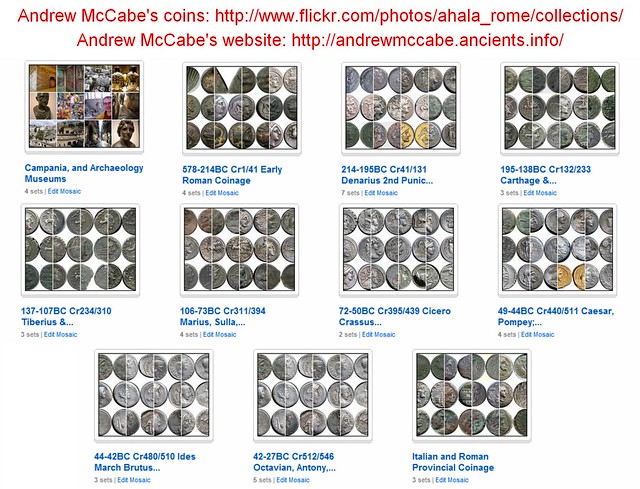
Continued reductions in the cost of online storage as well as increases in bandwidth means that coin pictures are no longer a luxury. I like plain text and there are no fancy gimmicks on this site, however an educational site abour coins benefits from a really good image database. Other image databases exist, Wildwinds, VCoins, Sixbid, CNGcoins etc. All these are great resources but this one is indexed in an academic manner by date and issuer, according to Crawford - and it will in time be updated to reflect revisions to Crawford. It places the time periods and coin issues in an historical context. And it includes many rare issues that have never yet appeared for sale on the internet, 1350 coins at the last count. In many cases pictures of these coins can only be found with difficulty and with great expense through the ownership of a long list of illustrious catalogues - Haeberlin's 1933 Cahn-Hess sale, Crawford, Kestner-Hannover, d'Ailly's collection with its line drawing illustrations, Goodman. Some coin types are as yet unpublished. Images are all from private sources, and all copyright. None appear elsewhere, other than within the linked image-bank. Please contact me if you want to use any image for a numismatic site.

There has been a step-change in numismatic auction catalogues in the last five years, both for good and bad, but mostly good. The availability of inexpensive online sales venues has led to the virtual disappearance of printed coverage of low end coins. Auctions more often show commoner types in better condition, rather than rarer types in collectable condition. Academic catalogues of Roman Republican coins such as the Vecchi 3 sale or the Goodman bronzes collection rarely now appear. There are honourable exceptions of course, the 2006 Münzen und Medaillen 19 Gibboni sale being one such. Series with higher average prices still justify academic printed catalogues, such as the BCD Boeotia and Peloponnese sales, and silver-only high-end Roman Republican collections may justify dedicated catalogues in the future, but all-metal catalogues are no more. However stepping into the void, the increasing online retention of internet-only sales from sites such as CNG may in time increase information about obscure but worn rare coins. The online information about Roman Provincial coins has greatly increased in recent years, many rare and from the Roman Republic. Detailed information from published printed catalogues is now routinely available online, from individual dealer sites, Sixbid or CNG (the Coinarchives database has been mostly closed to individual users so I no longer link to it). A collector with a worn denarius can readily find a perfect example online with a full historical description. What is more, academic research notes, a hallmark of great cataloguing, are now available to everyone. This is making numismatics more accessible.

A final trend arises from the lower cost of desktop publishing for printed books. An entire category of books has quietly emerged, and for which I have no name since it is a new thing. These are collections of information previously available only with great difficulty and expense through the ownership of obscure academic journal offprints, books long out of print, old sale catalogues etc, topped and tailed with new text or analysis that adds to this ancient information. Most of the examples I have recently seen are in languages other than English. Conii e scene di coniazone (dies and coining scenes) includes new essays combined with Cornelius Vermeule's classic work on dies. So I no longer need to recommend Vermeule's book as a standalone. Die Münzen der Römischen Republik by Rainer Albert is an attractive format single volume catalogue with a proper chronological layout, albeit snagged by some errors, whose input consists primarily of German auction catalogues of the 1990s. La Monetazione Romana Repubblicana by Catalli includes fresh text similarly combined with 1990s catalogues as resources, and I only wish it had an English translation. Richard Reece and Harold B Mattingly have republished their existing corpus in book format, a straightforward but valuable pure-publishing effort. And the translation of Babelon’s numismatic history by Elizabeth Saville is another book that might not have seen the light before the age of inexpensive desktop publishing. Thus I now rarely quote journal offprints in favour of a corpus or festschrift or collection format where that exists. There remain significant gaps, for example the contributions of Professor Ted Buttrey, whose archaeological work on Morgantina led to the fixing of the date of the denarius and who wrote many of the definitive die-studies on Imperatorial coins, cannot be found in one place. Only these rare exceptions will justify comment by me on an individual article that is not easily available in a widely published numismatic journal.

The trend towards online publication has not yet extended to information normally published in books. For example, HB Mattingly is surprised that the revised dating arising from the Mesagne hoard is not widely used. But it is not reproduced in any catalogue of the Roman Republic, nor easily found on the internet, so only those rare students who have access to a 25 year old paperback journal know this essential information. Really it is a disgrace. Incidentally the coins on this site are arranged according to Mesagne. There are no long-running online numismatic journals, and website coverage of the Roman Republic is generally fragmented with lots of individually interesting items hidden in scattered websites. The Journal of Ancient Numismatics with contributions on Republican coins by Mark Passehl is an honourable recent exception. I hope to see more from this source. Also, we should not neglect websites in other languages. Many readers of this page will be familiar with the Yahoo RROME group, but are you also aware of www.lamoneta.it which has an active Italian language discussion group on the Republic. The same site has an excellent and developing catalogue of Roman Republican coins though its coverage is still much much less than on this site. An excellent Spanish site is www.denarios.org/republica/ which combines a forum with an online collection and a wonderful collection of monographs on individual Republican coin types. The Spanish tesorillo.com/ is another site with good Roman Republican resources. For completeness I should add Numismatikforum and Numismatik-Cafe in German, although both are primarily discussion sites without significant expert-level content on the Roman Republic as compared with the Spanish and Italian sites. The English language discussion boards Moneta-L does not offer much specialist discussion on the Roman Republic, however Forvm offers the very valuable numiswiki resource containing many numismatic articles as well as the full text of Seth Stevensen’s numismatic dictionary.

I intend to use this page for periodic updates on the status of Roman Republican numismatic literature, and especially emerging trends in publishing as we gradually become more web enabled. Meanwhile, I hope you stumble across some interesting surprises on these pages. The site is rather large so please use my index below to help in your navigation.

Andrew McCabe
July 2009


Index: Direct Links to Coins and Books

Specific eras and sets of coins can be reached directly by clicking on the links below. This bypasses the web pages with much of the text and goes direct to the pictures. Further down are links to book review sections that cover some of the better known books, and to the short essays embedded in each page.

Direct link to Coin Pictures

Crawford Arrangement

The alternative Babelon or Sear RSC1 arrangement can be found at the end of this list, or an expanded family arrangement below the book review for RSC1.

Coins: 578-215 BC, Aes Grave and Didrachms, Crawford 1-41

>500-320BC bronze bars, Romes conquest of Italy
>320-270BC Cr1/19 Pyrrhic War
>270-225BC Cr20/27 1st Punic War
>225-214BC Cr28/41 Hannibal's conquests

Coins: 214-195BC, Second Punic War, Crawford 41-131

>214-195BC Cr41/124 Rome 2nd Punic war
>214-195BC Cr42/80 Sicily Sardinia 2nd Punic war
>214-195BC Cr43/99 Luceria 2nd Punic war
>214-195BC Cr45/131 Italy 2nd Punic war

Coins: 195-138BC, Scipio Africanus and Scipio Aemelianus. Cr132/233

>195-170BC Cr132/172 Macedon wars
>169-156BC Cr173/198 Greece Macedon conquest
>155-138BC Cr199/233 Carthago delenda est, Corinth

Coins: 137-107BC, Tiberius & Gaius Gracchi, Crawford 234/310

>137-132BC Cr234/251 Numantia, Tiberius Gracchus
>131-121BC Cr252/279 Gaius Gracchus
>120-107BC Cr280/310 Gracchan reforms, Gallia Narbonensis

Coins: 106-73BC, Marius, Sulla, Social War, Crawford 311/398

>106-92BC Cr311/336 Marius
>91-89BC Cr337/344 Social War
>88-82BC Cr345/366 Sulla Marius Cinna civil war
>82-73BC Cr367/394 Sulla, rise of Crassus, Pompey

Coins: 72-50BC, Cicero Crassus Caesar Pompey, Crawford 395/439

>72-59BC Cr395/417 Cicero Crassus Pompey Spartacus
>58-50BC Cr405/439 Caesar in Gaul, Crassus, Pompey

Coins: 49-44BC Caesar and Pompey, Crawford 440/480; 45-36BC Sextus Pompey, Crawford 477/511

>49-45BC Cr440/471 Pompey Scipio Cato Gn.Pompey
>49-45BC Cr442/474 Rome mint under Caesar
>49-44BC Cr443/480 Caesar own coins
>45-39BC Cr477/511 Sextus Pompey

Coins: 44-42BC, Ides of March to Phillipi, Crawford 480/507

>44-42BC Cr480/497 Octavian Antony Lepidus
>44-42BC Cr485/494 Rome, Ides of March to Phillipi
>44-42BC Cr500/510 Brutus Cassius, Ides to Phillipi

Coins: 42-27BC, Octavian, Antony, Cleopatra, Crawford 512/546

>42-36BC Cr512/540 Triumvirate Antony Octavian Lepidus
>36-30BC Cr542/546 Antony Cleopatra to Actium
>36-30BC HCRI392/410 Octavian to Actium
>30-27BC HCRI416/434 Octavian end of the Roman Republic

Coins: Italian and Roman Provincial Coinage

>Locally made small change
>Latin & Italian allies
>Roman Provinces

Sear Roman Silver Coins (RSC1) or Babelon’s Roman family arrangement

An expanded and much easier to read family arrangement can be found on with the book review for RSC1.

Aes Grave and Pre Denarius struck coins

Anonymous Denarius, Victoriatus, Quinarius, Sestertius

Aburia, Accoleia, Acilia, Aeficia, Aelia, Aemilia, Afrania, Annia, Antestia, Antia, Antonia, Appuleia, Aquillia, Arria, Atia, Atilia, Aufidia, Aurelia, Autronia, Axia, Baebia, Barbatia, Caecilia, Caesia, Calidia, Calpurnia, Carisia, Cassia, Cipia, Claudia, Cloulia, Cocceia, Coelia, Clovia, Considia, Cordia, Cornelia, Cornuficia, Cosconia, Cossutia, Crepereia, Crepusia, Critonia, Cupiennia, Curiatia, Curtia, Decia, Decimia, Didia, Domitia, Egnatia, Egnatuleia, Eppia, Fabia, Fannia, Farsuleia, Flaminia, Flavia, Fonteia, Fufia, Fulvia, Fundania, Furia, Gargilia, Gellia, Herennia, Horatia, Hosidia, Hostilia, Itia, Julia, Junia, Juventia, Licinia, Livineia, Lollia, Lucilia, Lucretia, Lutatia, Maenia, Maiania, Mallia, Mamilia, Manlia, Marcia, Maria, Matiena, Memmia, Mettia, Minatia, Minucia, Mussidia, Naevia, Nasidia, Neria, Nonia, Norbana, Numitoria, Numonia, Ogulnia, Opimia, Oppia, Papia, Papiria, Pedania, Petillia, Pinaria, Plaetoria, Plancia, Plautia, Plutia, Poblicia, Pompeia, Pomponia, Porcia, Postumia, Procilia, Quinctia, Quinctilia, Renia, Roscia, Rubria, Rustia, Rutilia, Salvia, Saufeia, Scribonia, Sempronia, Sentia, Sepullia, Sergia, Servilia, Sestia, Sicinia, Sosia, Spurilia, Statia, Sulpicia, Tarquitia, Terentia, Thoria, Titia, Titinia, Tituria, Trebania, Tullia, Turillia, Valeria, Vargunteia, Ventidia, Vergilia, Vettia, Veturia, Vibia, Vinicia, Vipsania, Voconia, Volteia.

Pompey and Sextus Pompey, Julius Caesar, Brutus, Cassius, Cornuficius, Labienus, Lepidus, Mark Antony, Fulvia, Octavia, Cleopatra, Lucius Antony, Octavian.

Direct link to Reviews of Better Known Books


Crawford, Grueber and Sear

Other Key References

Other Handbooks

Key Auction Catalogues

Sources for Numismatics


Direct link to short essays


All content copyright © 2004-2010 Andrew McCabe unless otherwise noted. If you've any questions or comments please contact me on the Yahoo Group RROME: http://groups.yahoo.com/group/RROME.
Alternately you can leave comments against any coin picture, just click on the picture and write in the comment box.

See my rarity estimates for Roman Republican Bronzes: Roman Republic Bronze Rarities..